 ENG
ENG
 INA
INA
Environmental Management of Vaname Shrimp Cultivation University General
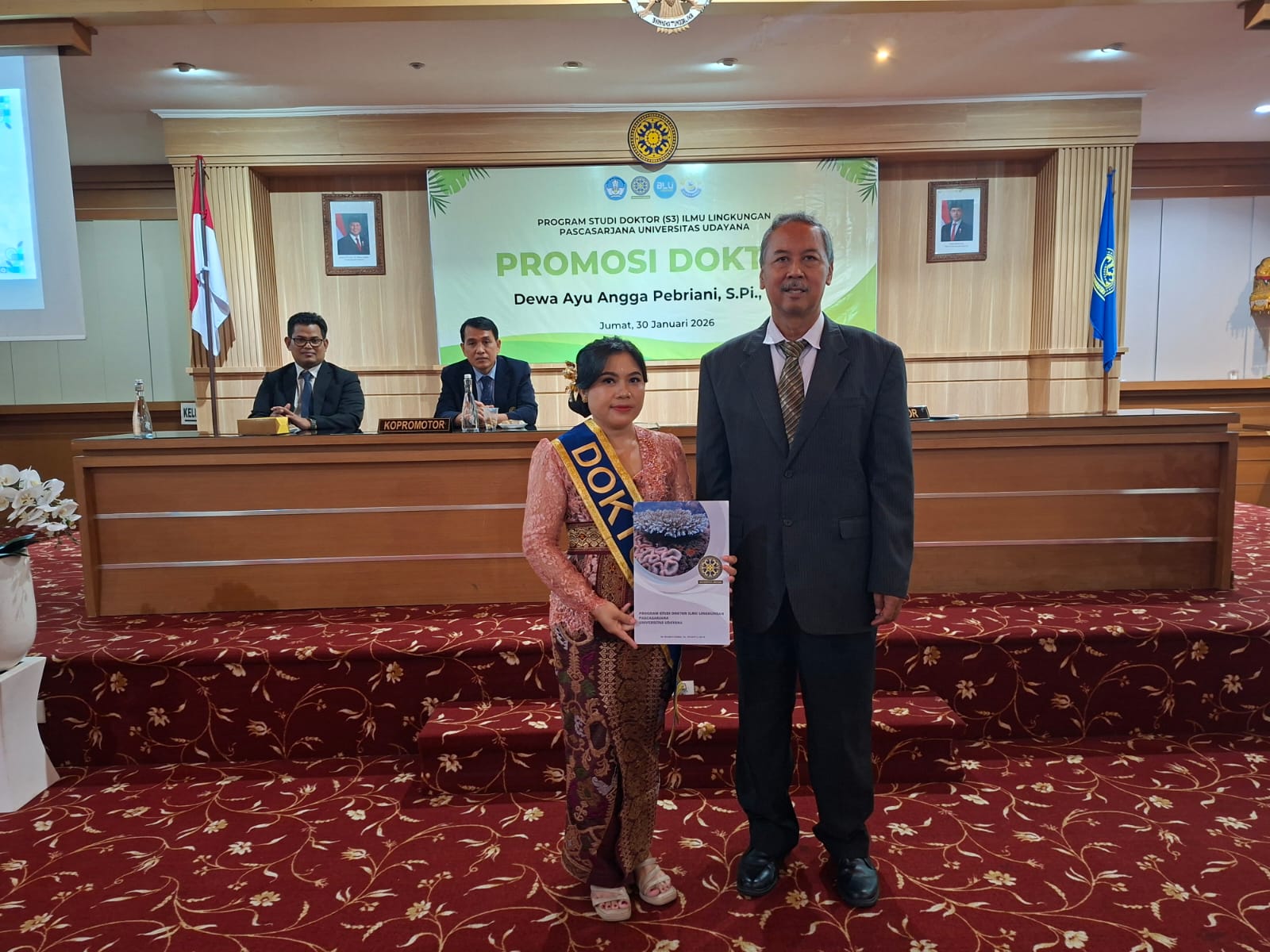
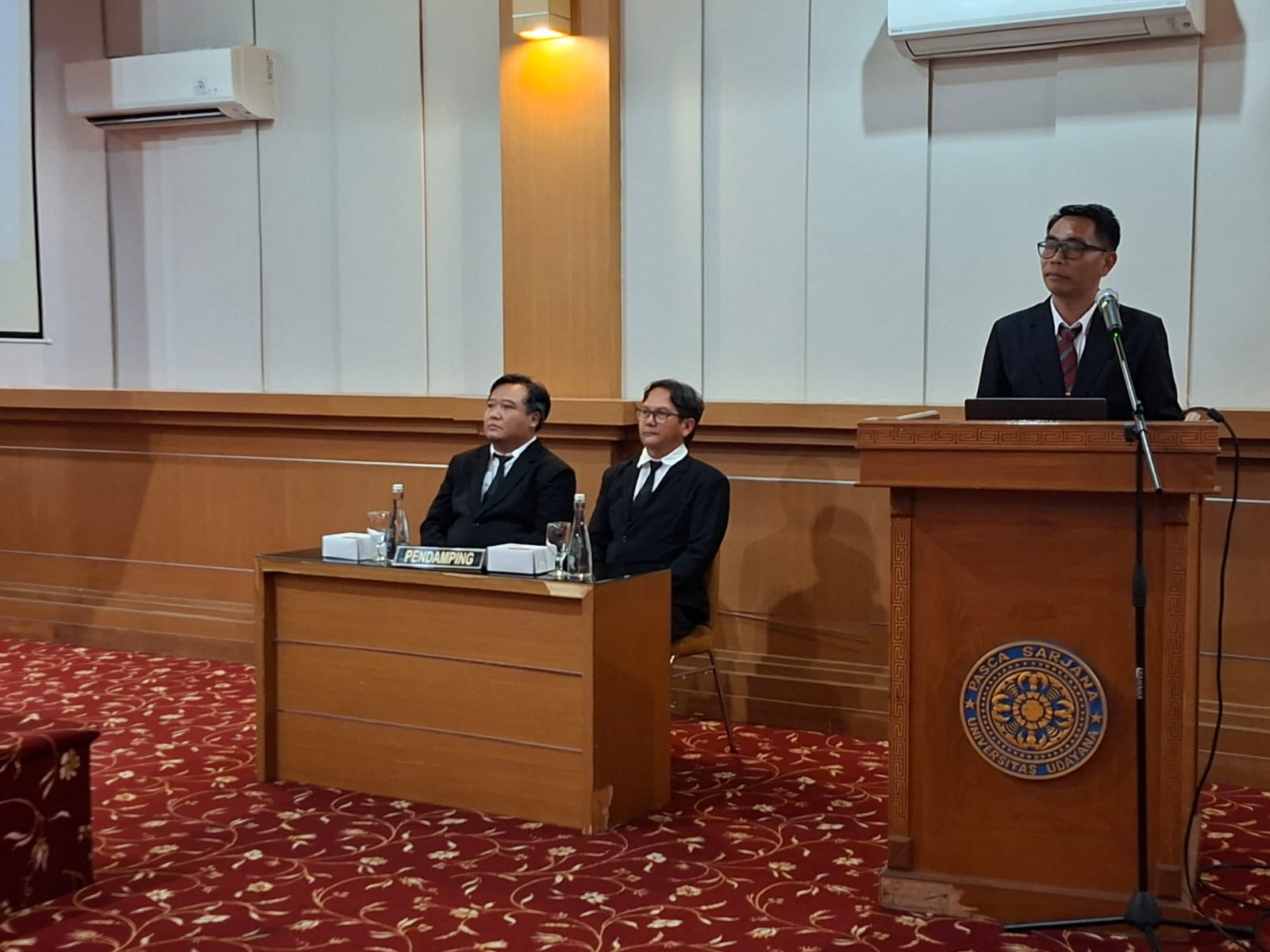
Denpasar, Friday (January 30, 2026), in the Hall of the Postgraduate Building of Udayana University, the Doctoral Program in Environmental Science (PDIL) of Udayana University (Unud) held the Second Stage Final Examination (Open Examination) with Promovenda Dewa Ayu Angga Pebriani, S.Pi., MP. Pebri successfully defended her dissertation titled “Evaluation and Strategies for Sustainable Vaname Shrimp Farming Management in Gerokgak District, Bali” in front of the examiners and academic guests. Acting as the chair of the session was the Coordinator of the PDIL Postgraduate Program at Unud as well as the promoter, Prof. I Wayan Arthana, MS, PhD, which consisted of eight examiners, namely Prof. Dr. Drs. I Wayan Budiarsa Suyasa, MS, Dr. Pande Gde Sasmita Julyantoro, S.Si., M.Si., Dr. Drs. I Made Sara Wijana, M.Si., Prof. Dra. Ni Luh Watiniasih, MSc, PhD, Prof. Ir. Ida Ayu Astarini, M.Sc., PhD, Prof. Dr. Ir. I Wayan Suarna, MS, Prof. Dr. Ir. I Wayan Sandi Adnyana, MS, and Dr. Nyoman Dati Pertami, S.P., M.Si., as well as five academic guests, namely Ima Yudha Perwira. S.Pi., M.P., D.Sc., Dr. Ni Made Suartini, S.Si., M.Si., Ni Made Utami Dwipayanti, ST., M.BEnv., PhD., Dr. Ir. Dwi Budi Wiyanto, S. Kel., MP., and Dr.Sc. Widiastuti, S.Kel., M.Si.
Vaname shrimp (Litopenaeus vannamei) farming in Gerokgak District, Bali, is a rapidly growing aquaculture sector, Pebri said in his presentation. However, this increase in activity has raised concerns about environmental impacts, particularly water pollution due to aquaculture waste containing high levels of organic matter and nutrients, which is what prompted me to conduct this research, he added. Pebri added that sustainability studies and comprehensive management strategies are needed to ensure that aquaculture activities are carried out in a sustainable manner. The sustainability status of vaname shrimp farming was analyzed using the Multi-Dimensional Scaling (MDS) method within the Rapid Appraisal for Fisheries (RAPFISH) framework across five dimensions (ecology, economy, society, institutions, and technology). Management strategies were analyzed using the Analytical Hierarchy Process (AHP) based on input from experts and farmers. The results showed that the quality of aquaculture wastewater was generally classified as lightly polluted, with the highest fluctuations occurring in May-June. The parameters of ammonia, nitrite, nitrate, and BOD showed a strong positive correlation. Analysis of the C/N ratio and total microbes in water and sediment indicated the accumulation of organic matter, concluded Pebri in his presentation.
Meanwhile, Prof. I Wayan Arthana, MS, PhD, as the promoter at the end of the open examination, gave a speech about the meaning of the dissertation and congratulated the promovenda, her family, and the Faculty of Marine Science and Fisheries, Udayana University, where the promovenda works, for adding another lecturer with a doctoral degree. Prof. Arthana stated that this research focused on the management of vaname shrimp farming in Gerokgak, Bali—a vital sector for the local economy and national food security. The research identified concrete challenges such as the risk of pond waste pollution, wasteful use of resources (water, energy), and price fluctuations that threaten business continuity, added Prof. Arthana (DK).
UDAYANA UNIVERSITY